
Microfibre cloth vs sponge: which cleans better
Microfibre cloth vs sponge: cloths lift dust and grease and dry fast, sponges scrub and soak up. A simple table and a hygiene rule for the kitchen.
Chloé Petit4 min read
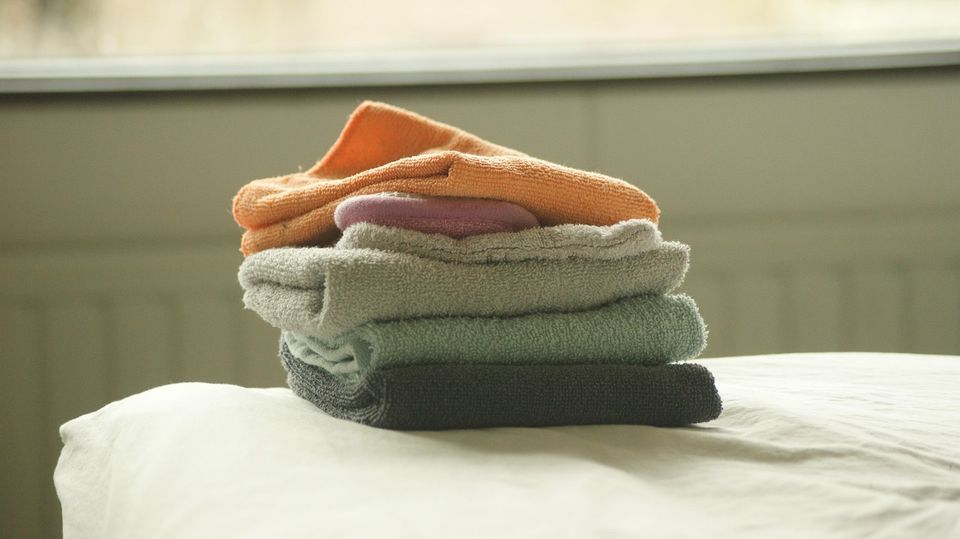
Verdict: microfibre wins for wiping. A sponge wins for scrubbing. Most kitchens need both, and a short habit of washing and drying them matters more than the type.
Which wins on
| What matters | Microfibre cloth | Sponge |
|---|---|---|
| Wiping counters | Better | Fine |
| Scrubbing burnt food | Poor | Better |
| Glass and mirrors | Better | Leaves marks |
| Drying time | Faster | Slow |
| Smell build-up | Lower if dried | Higher if left wet |
| Lifespan | Many washes | Weeks |
Pick a microfibre cloth if
- You wipe counters, tables or windows.
- You dust and want less spray.
- You want something that dries quickly.
- You clean with plain water most days.
Pick a sponge if
- You wash dishes by hand.
- You need to scrub stuck-on food.
- You want a pad that holds suds.
Rule: use a clean, dry item every time. Damp, old sponges and cloths smell and spread germs. Rinse them, wring them out and let them dry after use. Replace sponges when they smell or fall apart. Wash cloths in the machine on the care label.

Caution
Do not use the same cloth for raw meat juices and your counters. Use one product at a time, and rinse between. Food safety bodies recommend keeping cloths for raw meat separate. For stuck-on mess, see how to clean a burnt pan.
Where the answer flips
For a sticky oven tray, a sponge with a scourer side is better. For polishing a stainless steel hob, a dry microfibre cloth is better and leaves fewer streaks. For a bathroom, microfibre dries faster, so it grows fewer smells, but it needs washing.
Worked example
A kitchen has a counter with crumbs and a pan with burnt egg. Round numbers: wipe the counter with a damp cloth in one minute. Scrub the pan with a sponge for three minutes. At the end of the day, rinse both, wring them out and hang them to dry. The cloth goes in the wash twice a week. The sponge gets replaced every couple of weeks or when it smells.
Common mistakes
- Fabric softener on microfibre. It coats the fibres and they stop picking up dirt.
- Using one cloth for everything. Use a different one for the bathroom and the kitchen.
- Leaving a sponge in a puddle. Let it dry.
- Scrubbing non-stick with a rough pad. Use a soft sponge.
What to buy
A pack of ten cloths and a pack of sponges costs a few dollars. Keep colours for jobs, such as blue for the kitchen and grey for the bathroom.
How to keep both clean
Cloths go in the washing machine, on the setting on the care label, with no fabric softener. Dry them fully. A sponge can go in the dishwasher on a hot cycle if the maker says so, but replace it as soon as it smells or crumbles. Many kitchens swap sponges every one to two weeks.
Sort your cloths
Use a simple system. Blue for the kitchen, green for the bathroom, grey for dusting. Never move a bathroom cloth to the kitchen. Raw meat juice gets a paper towel, then the bin. This keeps things simple and safe.
Cleaning products: use one at a time. Do not spray one cleaner onto a surface still wet with another. Rinse with water between. For a plain wipe, water and a clean cloth are often enough.
For floors, the same idea carries over. See steam mop vs regular mop for how pads and heads fit in, and how to clean a microwave with steam for a job where a cloth does most of the work.
Quick questions
Can I microwave a sponge to clean it?
Advice varies and it can start a fire if dry. It is safer to replace sponges often.
How often do I wash cloths?
After heavy use, or at least weekly.
Do I need chemicals with microfibre?
Often plain water is enough for light wiping.
Can microfibre scratch?
Rarely, unless grit is trapped in it. Rinse first.
More to read
Keep reading

Steam mop vs regular mop: which is worth buying
Steam mop vs regular mop: steam suits sealed hard floors and avoids chemicals, a regular mop is cheaper and safer for wood. A table and a floor-type rule.
Malik Zerrouki4 min read
Vinegar vs citric acid for limescale: which to use
Vinegar vs citric acid for limescale: both dissolve it. Vinegar is already in your cupboard, citric acid has no smell and rinses cleaner. Pick by job.
Malik Zerrouki4 min read
How to get red wine out of carpet: what to do right now
Red wine spilled on carpet? Blot, never rub, dab with cold water and then use a mild soap solution. Steps for fresh and dried stains, plus what not to do.
Malik Zerrouki3 min read
The cleaning shelf you can halve
A column on why most homes can clean well with a few products used one at a time, and how to cut the cupboard of sprays down without losing anything.
Chloé Petit4 min read
How to remove limescale from a shower head
Remove limescale from a shower head by soaking it in a bag of white vinegar for an hour, then brushing the nozzles clear. Steps, limits and safety tips.
Malik Zerrouki3 min read
Washing machine smell: how to fix it and keep it away
Fix a washing machine smell by cleaning the door seal and detergent drawer, running a hot empty wash and leaving the door open. Steps from free to replace.
Malik Zerrouki6 min read