
How to untangle a necklace chain without breaking it
Untangle a necklace chain with a pin, a drop of oil and patience. Lay it flat, loosen the knot, and pull gently. Steps for fine chains and when to stop.
Malik Zerrouki2 min read
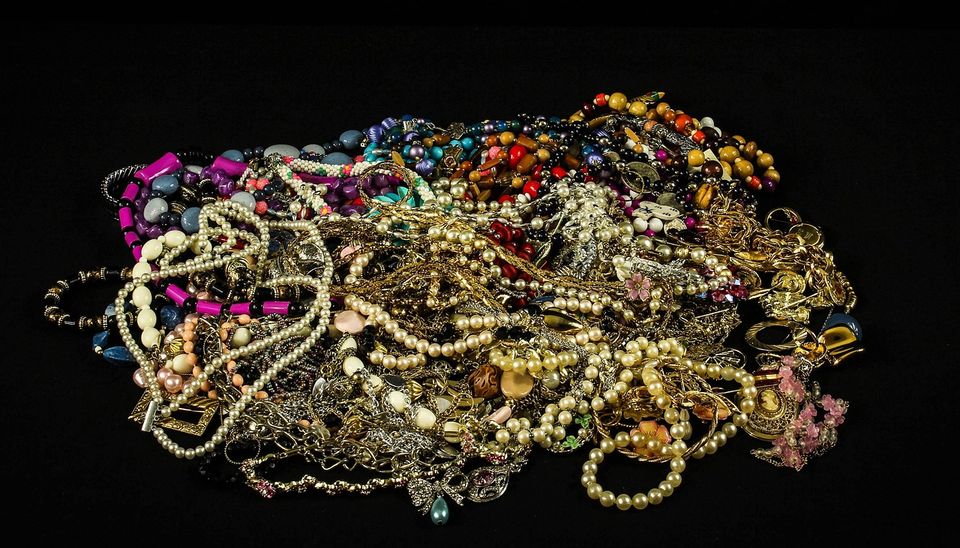
10 to 20 minutes. Costs nothing.
Try this first (costs nothing): lay the chain flat on a smooth surface under good light, such as a plate or a sheet of paper. Do not pull the ends. Pulling tightens the knot. Look for the loosest loop.
Loosen the knot
- Put one tiny drop of baby oil, olive oil or a bit of talc on the knot. This helps the links slip.
- Use two pins or the tips of tweezers. Push into the knot from the sides, not through the middle.
- Wiggle the loops open a little at a time.
- Pull the loose part out, then the next.
- When the chain is free, wipe off the oil with a soft cloth.

Give yourself a rest if you get annoyed. A knot rarely loosens when you rush.
If that does not work
- Try a different angle. Turn the chain over and work from the other side.
- Warm soapy water. Soak a sturdy chain for 5 minutes in warm soapy water, then try again. Skip this for jewellery with stones, pearls or glue.
- Take it to a jeweller. For very fine or valuable chains, they can often untangle them quickly for a small fee.
Do not use strong cleaners or mix products on jewellery. Use one product at a time.
Stop it happening again
- Fasten the clasp before putting a chain away.
- Hang chains from hooks or keep each in a small pouch or a straw.
- Do not toss chains loose in a drawer or a bag.
Fix it, replace it or live with it
- Fix it: a knot in a sturdy chain, with patience.
- Replace it: a very cheap chain that you have fought with for an hour.
- Live with it: a thin chain with a kink. It often sits fine under clothes.
If a tangle comes from a drawer that jams too, see how to fix a sticking drawer.
A zip that jams is a similar small-parts puzzle, see how to fix a stuck zip.
More to read
Keep reading
The toaster that is not worth repairing
A column on when a cheap toaster that burns one side is better replaced than repaired, and how to tell the difference between a small fix and a dead appliance.
Malik Zerrouki4 min read
The pan you should stop scrubbing
Some fixes are not worth the effort. A scratched, sticky nonstick pan is one of them, and here is how to tell a fixable pan from one to replace.
Malik Zerrouki3 min read

The wobbly flat-pack shelf you should stop tightening
When a wobbly flat-pack shelf is worth fixing and when to let it go. A plain rule for loose screws, swollen board and how to decide in a minute.
Malik Zerrouki4 min read
Stop a door squeaking in two minutes
Stop a door squeaking in two minutes: find the noisy hinge, wipe it, add a tiny amount of lubricant and tighten a loose screw. It is nearly always the pin.
Malik Zerrouki2 min read
How to fix a sticking drawer that will not slide
A sticking drawer usually needs the runners cleaned and a dry lubricant, or a swollen edge rubbed with wax. How to find the cause and when to replace it.
Malik Zerrouki2 min read
Plunger vs drain snake: which clears a blocked sink
Plunger vs drain snake: a plunger clears soft, close blocks and a snake pulls out hair and grease deeper in the pipe. A table and a simple order to try them.
Chloé Petit4 min read