
Adhesive strips vs nails for hanging pictures
Adhesive strips vs nails for hanging pictures: nails hold heavy frames, strips protect paint and suit light ones. A table, a weight rule and when to check.
Malik Zerrouki4 min read

Verdict: nails win for anything heavy or that you cannot afford to drop. Strips win for light frames when you rent, or do not want holes. Neither suits a damp bathroom wall or rough plaster.
Which wins on
| What matters | Adhesive strips | Nails or hooks |
|---|---|---|
| Heavy frames | Weak | Strong |
| No wall damage | Better | Leaves holes |
| Rented homes | Often easier | Check the lease |
| Rough or dusty walls | Poor | Fine |
| Removal | Peel with care | Fill the hole |
| Speed | Fast | Slower |
Pick strips if
- The frame is light and the pack says it fits the weight.
- The wall is smooth, clean and painted.
- You want to move it later.
- You rent and holes are a worry.
Pick nails if
- The frame is heavy, glass, or a mirror.
- The wall is rough or textured.
- It hangs over a bed or a sofa, where a fall would hurt.
- You will leave it for years.
Rule: add up the weight, then use the pack limit with a margin. If a pack says 2 kg and your frame is close to that, go with nails.
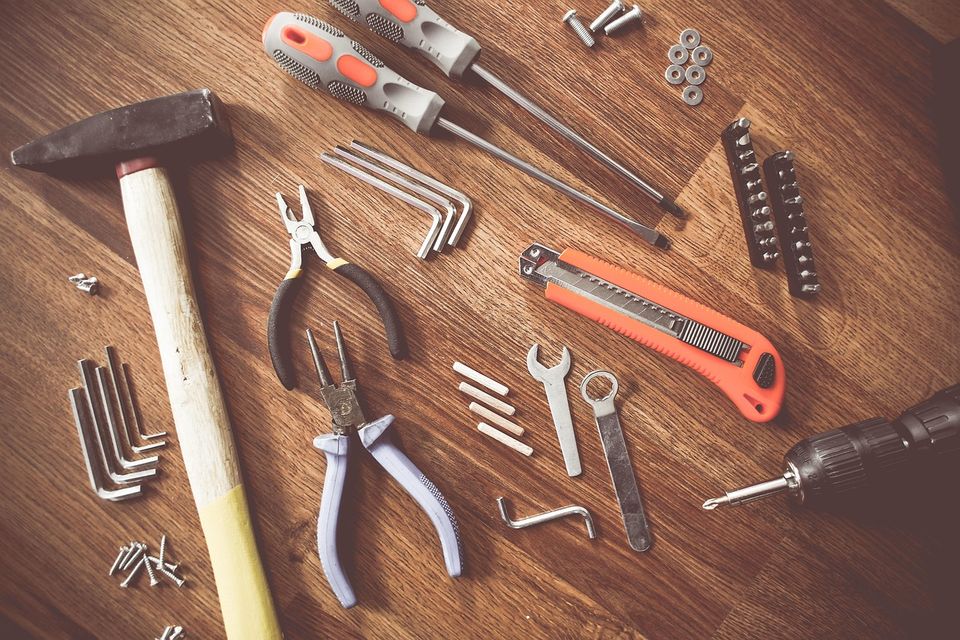
Caution
Check for hidden pipes and cables before drilling or nailing. A cable and pipe detector helps. If unsure, ask a qualified tradesperson. Pull strips slowly along the wall to avoid taking paint. For a mirror or anything heavy, see the wobbly flat-pack shelf you should stop tightening for why wall fixings matter.
How to choose by weight
Check the weight of the frame first. Kitchen scales work for small frames. Add the weight of any glass. Compare with the limit on the strip pack and take off a good margin. Nails and hooks also have a limit. A picture hook might carry 5 kg, but the wall matters too. In plasterboard (drywall) a nail holds less than in brick. For heavy items, use a wall plug or a screw into a stud.
Worked example
Take three frames with round numbers. A small 1 kg print in a hallway: strips are fine on a clean painted wall. A 4 kg mirror over a sofa: use two proper hooks or screws and plugs, rated for more than the weight. A 10 kg frame: use screws into a stud or masonry anchors. In each case, the pack rating should be higher than the weight, and you should follow the maker's guide.
Where the answer flips
Strips fail on damp walls, textured paint, wallpaper, and in hot kitchens. They also struggle on freshly painted walls, which need time to cure. In those places a hook is more reliable. Nails fail in soft plaster that crumbles. A rawl plug helps there.
Common mistakes
- Not cleaning the wall first. Dust stops strips sticking.
- Pulling strips straight out. Stretch them along the wall.
- Hanging on one hook. Two hooks keep it level.
- Ignoring hidden cables. Check before drilling.
Three questions before you hang it
- Can I afford to drop it? If not, use a fixing that goes into the wall.
- Will it stay here for years? If yes, nails and plugs last longer than tape.
- Is the wall smooth and painted? Strips need that. Brick, wallpaper and texture do not take them.
If you answer yes, yes and no to those, nails win. If you answer no, no and yes, strips win. Anything in between is a judgement call, and the lighter option is fine for a small print, while the safer one is worth it for a mirror.
A word on tools: a small spirit level, a pencil and a tape measure make the job look right the first time. Mark the hook spot on the wall, not on the frame. If you are putting up a group of frames, cut paper shapes the size of each frame and tape them to the wall first. Move them around until you like it. Then mark the hook points through the paper.
Sometimes a picture shelf or a ledge is simpler than holes. A shelf lets you swap frames without touching the wall again. For furniture that needs the same care, see how to fix a wobbly chair.
Quick questions
How do I remove adhesive strips?
Pull the tab slowly, parallel to the wall, to stretch it free.
Can strips hold a mirror?
Only a light one, and only if the pack says so. Heavy mirrors need proper fixings.
Do I need a stud?
Heavy items do. Light frames do not.
How do I fill nail holes?
Use a little filler, let it dry, and touch up the paint.
More to read
Keep reading
How to untangle a necklace chain without breaking it
Untangle a necklace chain with a pin, a drop of oil and patience. Lay it flat, loosen the knot, and pull gently. Steps for fine chains and when to stop.
Malik Zerrouki2 min read
The toaster that is not worth repairing
A column on when a cheap toaster that burns one side is better replaced than repaired, and how to tell the difference between a small fix and a dead appliance.
Malik Zerrouki4 min read
The pan you should stop scrubbing
Some fixes are not worth the effort. A scratched, sticky nonstick pan is one of them, and here is how to tell a fixable pan from one to replace.
Malik Zerrouki3 min read
The wobbly flat-pack shelf you should stop tightening
When a wobbly flat-pack shelf is worth fixing and when to let it go. A plain rule for loose screws, swollen board and how to decide in a minute.
Malik Zerrouki4 min read
Stop a door squeaking in two minutes
Stop a door squeaking in two minutes: find the noisy hinge, wipe it, add a tiny amount of lubricant and tighten a loose screw. It is nearly always the pin.
Malik Zerrouki2 min read
How to fix a sticking drawer that will not slide
A sticking drawer usually needs the runners cleaned and a dry lubricant, or a swollen edge rubbed with wax. How to find the cause and when to replace it.
Malik Zerrouki2 min read